Pick a diamond wire saw for your granite quarry and worried you’ll end up with one that wears out fast or breaks on the first big block? I talk to quarry people all the time, and this comes up a lot—especially when you’re dealing with different stone hardness or tight production schedules. The wrong wire can cost you days.
This guide is here to help you figure it out. We’ll go through what actually matters when choosing a diamond wire saw for granite quarry work, based on what operators are using every day in 2026. It’s straight talk so you can get a wire that fits your quarry, cuts well, and doesn’t leave you stuck replacing it too often.
What Makes a Diamond Wire Saw Work in Granite Quarries
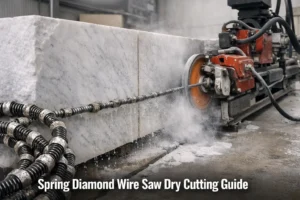
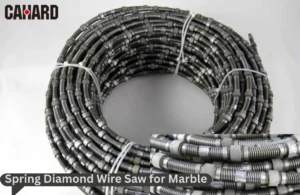
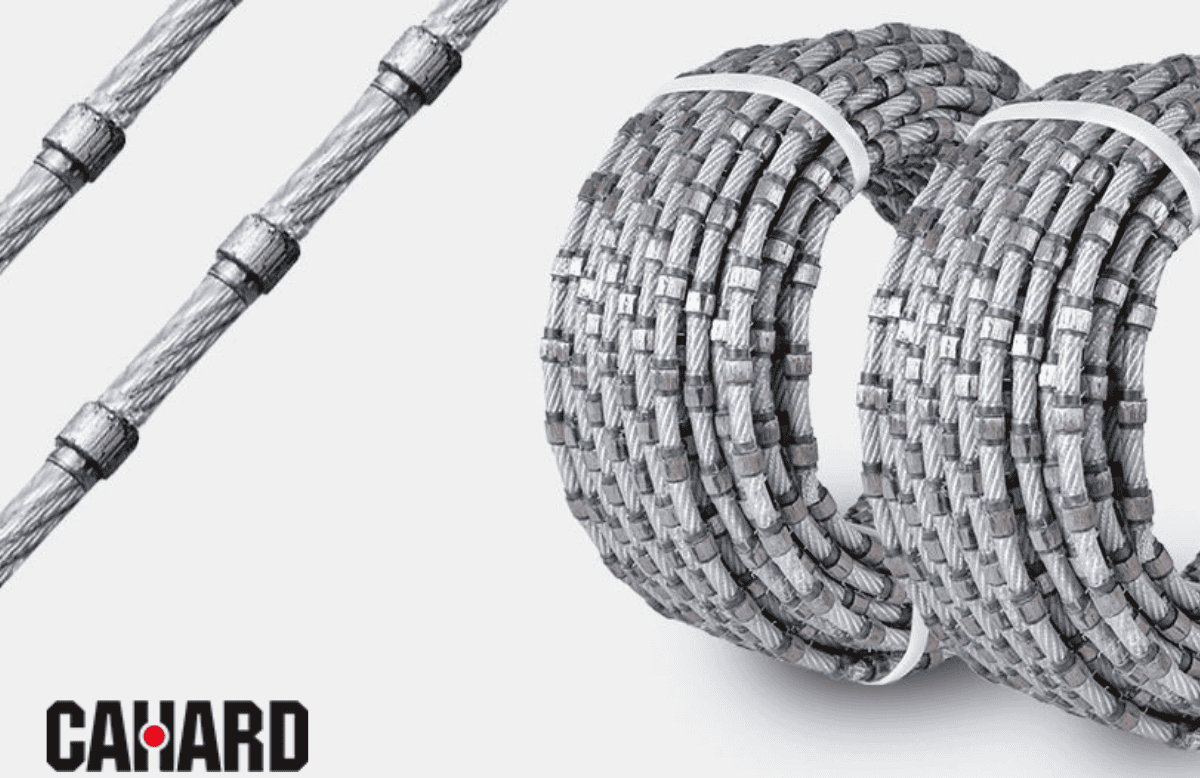
A diamond wire saw is a steel cable with diamond beads on it. You loop it around the granite block and pull it through with water to keep the beads cool and flush the dust.
The beads do the cutting, and granite is tough stuff, so the wire needs to wear slowly and keep showing fresh diamonds. Here’s a simple look at the main types used in US quarries:
| Type of Diamond Wire Saw | Bead Type | Best for Granite Task | Common Diameter | Coating Type |
|---|---|---|---|---|
| Sintered Bead | Fused metal | Hard block cutting | 10.5–12.5mm | Plastic/spring |
| Electroplated Bead | Plated layer | Medium hardness profiling | 10.5–11.5mm | Plastic |
| Vacuum Brazed Bead | Vacuum heat fused | Granite with impurities | 11.5–12.5mm | Rubber/spring |
| Multi-Layer Bead | Layered diamonds | High-volume extraction | 12.0–12.5mm | Rubber |
Sintered beads are still the go-to for most granite quarries because they hold up well. In the US, where stone can change from site to site, a good plastic or rubber coating makes the wire more forgiving on uneven blocks.
Things to Think About Before You Buy
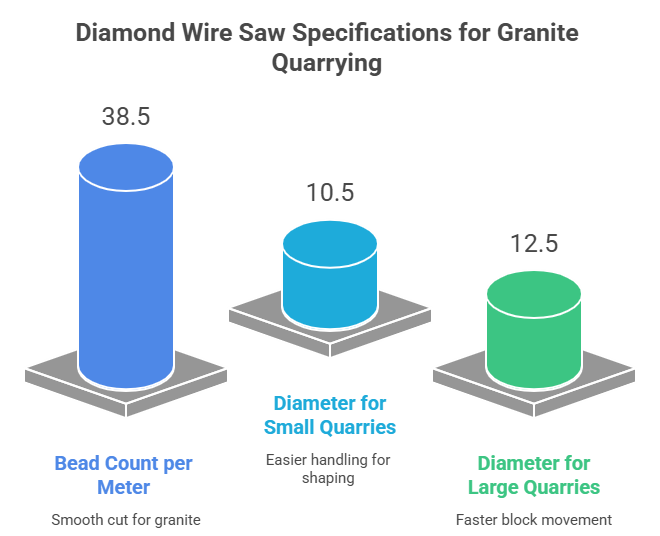
Your granite comes first. If it’s the really hard kind like some Vermont or Georgia stone, you want a bead that won’t glaze over quickly. Bead count per meter usually sits around 37–40 for granite—enough for a smooth cut without slowing you down too much.
Diameter is a big one. Thinner wires are easier to handle but wear quicker on hard rock. Thicker ones give more power but need a stronger machine. In small US quarries, people often run 10.5mm for shaping, while big commercial ones go for 12.5mm to move blocks faster.
Water and your saw matter too. Most US quarries run wet to cool the wire and control dust. If your machine is hydraulic, make sure the wire can handle the tension without stretching. Check our diamond wire saw lineup—we have options that work with the common quarry machines.
Picking the Right Diameter for Your Quarry
Diameter changes how the wire behaves. Smaller ones bend easier but lose life on tough granite. Bigger ones stay straight and cut faster but weigh more.
Here’s how the diameters usually shake out in granite quarries:
| Diameter | Main Use | Cut Speed (sq m/hr) | Good Points | Drawbacks |
|---|---|---|---|---|
| 10.5mm | Shaping and profiling | 2–4 | Easy to maneuver | Less stable on big blocks |
| 11.5mm | Block squaring | 3–5 | Nice balance | Average wear on very hard rock |
| 12.0mm | Primary cutting | 4–6 | Faster on medium granite | Needs more machine power |
| 12.5mm | Heavy extraction | 5–7 | Very stable, long life | Heavier and less flexible |
In places like Elberton, Georgia, 12.0mm is a favorite for volume. If you can, try a short piece on your stone first—granite can surprise you depending on the minerals.
Bead Types and Coatings That Work Well
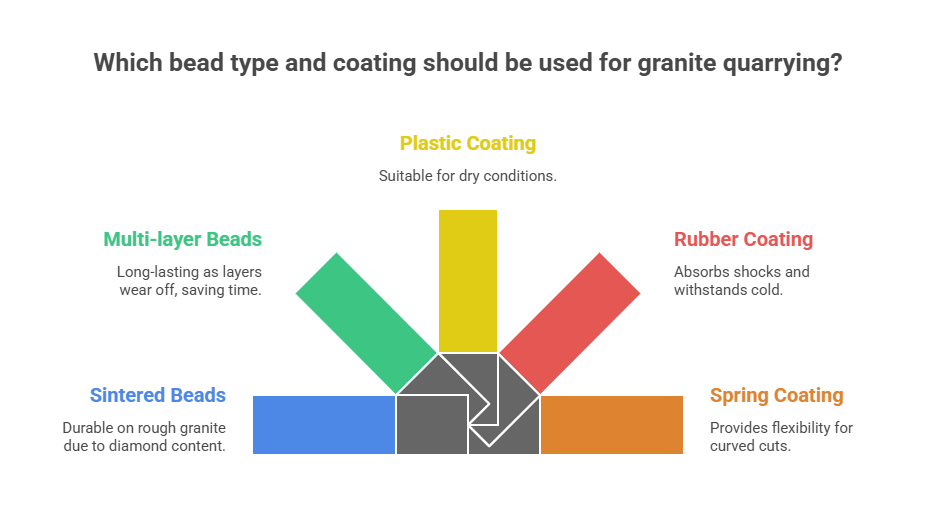
The beads are what do the real work. Sintered beads with plenty of diamond hold up on granite’s roughness. Multi-layer beads are newer and keep going as layers wear off, which saves time in busy quarries.
Coatings protect the cable. Plastic is good for drier conditions, rubber takes shocks on rough ground. Spring coatings add some give for curved cuts when blocks aren’t perfectly square.
In colder parts of the US, rubber coatings hold up better without cracking. For more on bead design, the Granite Quarriers Association has useful info in their tools guide.
Getting the Wire to Work with Your Machine
Your saw sets the rules. Hydraulic machines in US quarries need wires that can take steady tension. Match bead spacing to your pulleys so it doesn’t slip.
Setup tips: Thread the wire carefully and start slow to let it break in. Water flow around 2–3 liters per minute keeps things cool. In dusty quarries, add a vacuum to stay on the right side of regulations.
OSHA puts a lot of focus on dust—wet cutting is the easiest way to handle it. Their silica standard page has the details for quarries.
Cost, Maintenance, and Getting the Most Out of It
Don’t just look at the price tag. A wire that lasts 200–300 square meters saves you money on replacements. Check beads every shift and retension when it starts to loosen.
In US quarries where downtime costs real money, a reliable wire pays for itself fast. Our quarry wire saws are built for that kind of use—reach out if you want to talk specifics.
FAQs
What diameter is best for starting cuts in a granite quarry? Answer: 11.5mm or 12.0mm gives a good balance—thinner for small blocks, thicker for bigger ones.
How does bead type affect cutting granite? Answer: Sintered beads wear evenly on hard granite, while vacuum brazed handle impurities without losing diamonds.
Do I have to use water with diamond wire saws in US quarries? Answer: Yes, it’s the best way to cool the wire, control dust, and meet OSHA rules.
Can one wire saw handle different granite types? Answer: A multi-layer bead wire adapts pretty well, but test it on your stone to avoid issues.
Where can I get help choosing a diamond wire saw for my quarry? Answer: Check out cahardtools.com/diamond-wire-saw/—we have quarry-specific options. Email sales@cahard.com or call Ms Alice at +86 15902013674.
Want to get the right wire for your quarry? Look through our selection or email sales@cahard.com—Ms Alice can help (+86 15902013674).