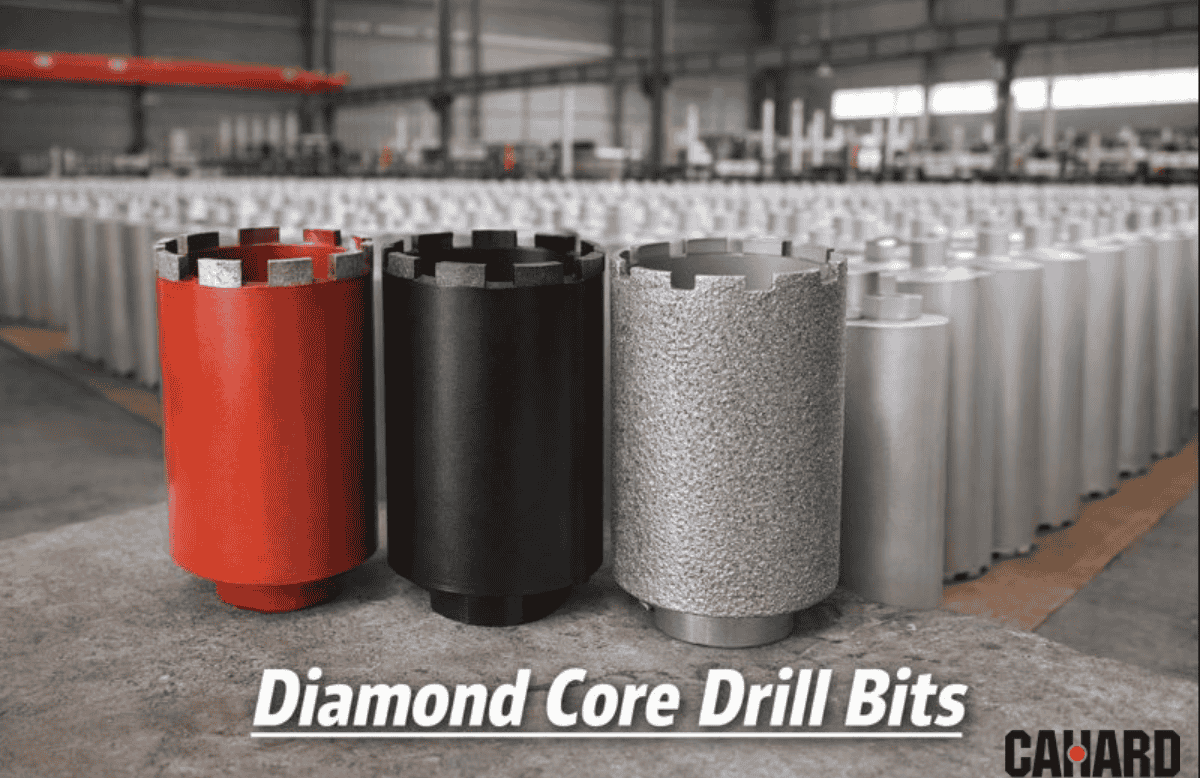
If you’ve ever been on a job where the core bit hits rebar and just stops — or worse, the hole comes out crooked and you have to start over — you know how much that slows everything down. Contractors deal with this all the time, whether it’s running pipes through a foundation or conduits through a floor slab. The wrong bit turns a normal day into a headache.
This article is here to help you find the diamond core drill bits that actually get the job done when concrete has rebar inside. I’ll walk through the types that hold up, how to pick the right size and style, and some real-world tips that make drilling faster and cleaner.
The Main Types of Diamond Core Drill Bits
The bit you choose depends on what you’re drilling and how much rebar is in the way.
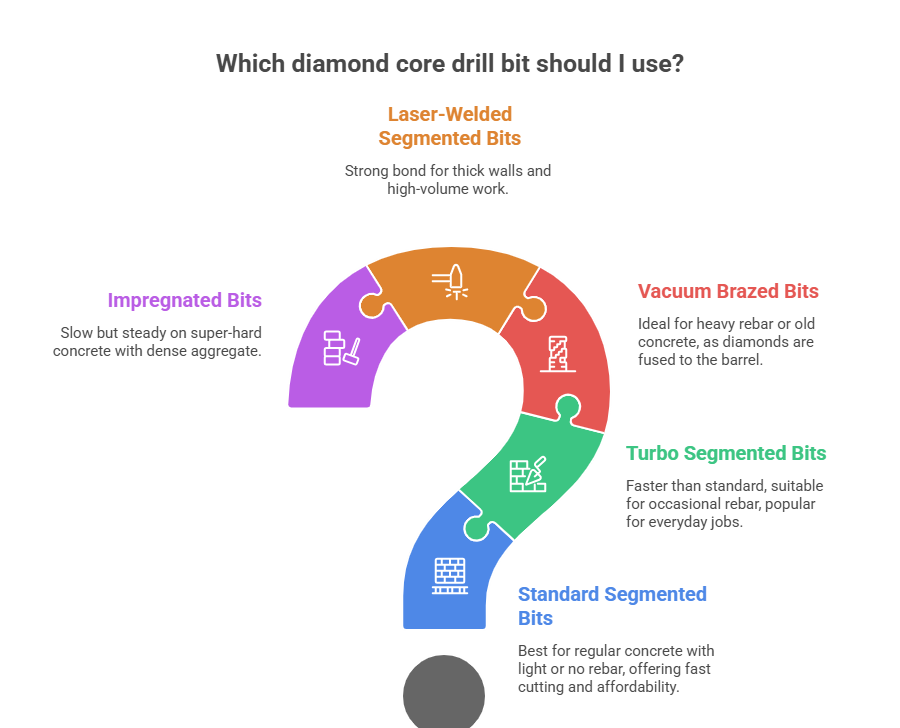
Here are the ones most crews actually use:
- Standard segmented bits — Good for regular concrete with light or no rebar. They cut fast and are affordable.
- Turbo segmented bits — Faster than standard, still decent on occasional rebar. Most popular for everyday jobs.
- Vacuum brazed bits — These are the tough ones. The diamonds are fused right to the barrel, so they don’t lose pieces when they hit steel. Perfect for heavy rebar or old concrete full of surprises.
- Laser-welded segmented bits — Very strong bond, great for thick walls and high-volume work.
- Impregnated bits — Slow but steady on super-hard concrete with dense aggregate.
If rebar is common on your jobs, vacuum brazed is usually the way to go. Turbo segmented is the safe middle ground for most people.
Picking the Right Size and Length
Size is straightforward — match it to what you’re installing.
- 1–2 inches: electrical conduits, small plumbing
- 3–4 inches: HVAC lines, drainage
- 5–6 inches: large pipes, vents
- 7+ inches: heavy utilities, structural sleeves
Length depends on wall or slab thickness. Short barrels (12–18 inches) are fine for thin walls. Longer ones (24–36 inches or more) are needed for deep pours or foundations.
Quick rule: always have a bit a few inches longer than the material you’re drilling through. It gives you room to work and clears slurry better.
Wet Drilling vs Dry Drilling
Most pros use wet drilling for concrete. It cools the bit, flushes the hole, and keeps dust down (which is huge for health and regulations).
Dry drilling is faster for quick outdoor jobs, but it wears bits out quicker and makes a mess. Vacuum brazed bits handle dry better because they don’t overheat as easily.
In the US, wet drilling is almost always the smarter choice because of OSHA silica rules. You can read the full details on their silica dust page.
Tips That Actually Make a Difference on the Job
- Start slow to seat the bit properly.
- Use steady, even pressure — don’t lean on it too hard.
- When you hit rebar, ease off and let the bit grind through slowly.
- Pull the bit out every so often to clear slurry.
- Clean the bit after each job — dried concrete builds up and kills performance.
- Always wear goggles, respirator, and hearing protection.
Wet drilling + these habits = bits that last much longer and holes that come out clean.
Frequently Asked Questions
What bit is best when there’s a lot of rebar? Vacuum brazed. The diamonds stay locked in place even when you hit steel hard.
Can a turbo bit handle rebar at all? Yes, light or occasional rebar is fine. Heavy or frequent rebar is where vacuum brazed really shines.
Is wet drilling a must? Not legally in every situation, but it’s the best way to keep the bit cool, control dust, and meet most safety rules.
How long should a good bit last? Hundreds of holes if you treat it right. Vacuum brazed ones often outlast others by a lot on tough jobs.
Where can I get bits that are actually good? We keep solid ones in stock at cahardtools.com/core-drill-bits. Email sales@cahard.com or call Ms Alice at +86 15902013674 — she can help you pick the right size and type for your work.
Need a bit that drills fast and survives rebar? Take a look at our selection or drop sales@cahard.com a line — Ms Alice can sort you out (+86 15902013674).