Ever been stuck on a job where the cut just drags on forever, beads start popping off, or the whole thing overheats the second you hit rebar? Or maybe you’re in a quarry watching production slow because the rope saw chain can’t keep up with hard granite blocks? Guys doing this work across the country—from quarries in the Northeast to demolition sites out west—know how frustrating that gets.
That’s why I pulled this guide together: to help you find the best diamond rope saw chains that actually hold up for granite, concrete, and metal cutting here in the States. We’ll look at what separates the reliable ones from the rest in 2025, based on what operators are running on real jobs, so you can cut cleaner, faster, and with less downtime.
Common Types of Diamond Rope Saw Chains and What They Handle
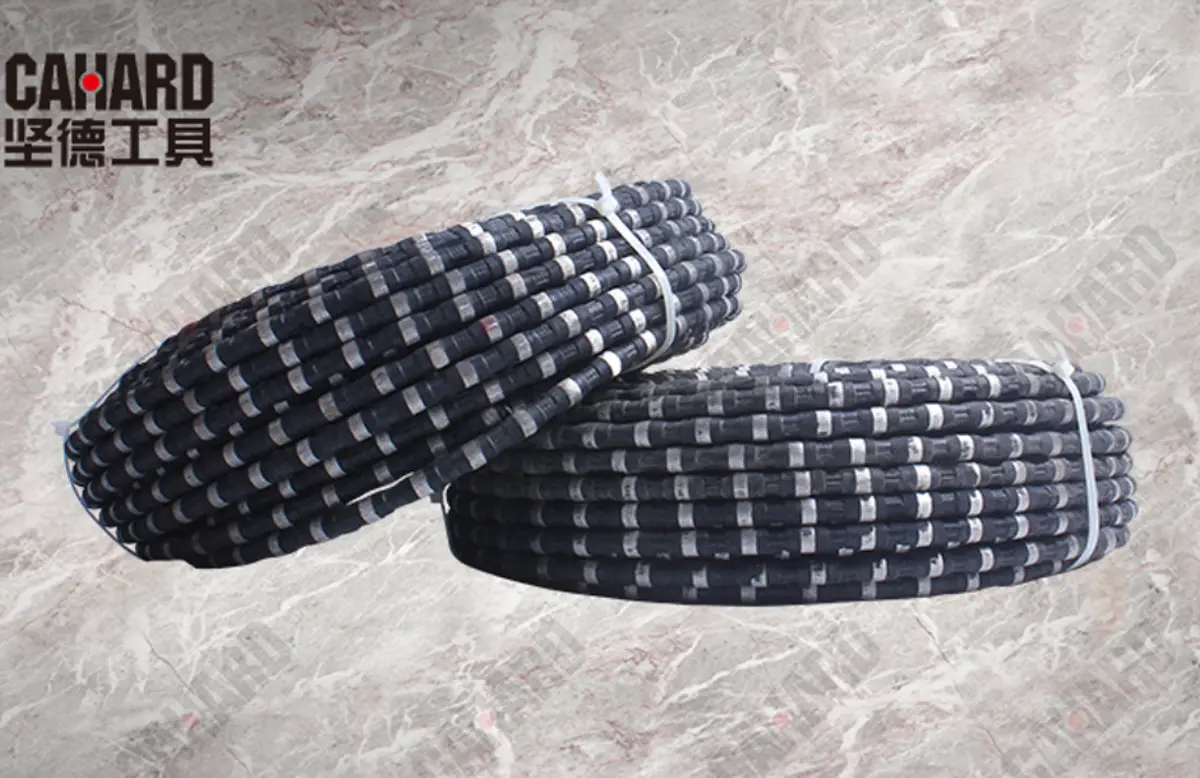
People sometimes mix up terms, but a diamond rope saw chain is that flexible steel cable loaded with diamond beads—perfect for big cuts where rigid blades won’t reach.
Different bonding and coatings make them suited for specific materials. Here’s a straightforward comparison of the main kinds US crews use:
| Diamond Rope Saw Chain Type | Best For | Bead Technology | Typical Diameter | Coating Options | Common Applications |
|---|---|---|---|---|---|
| Sintered Bead | Hard granite quarrying | Sintered | 10.5–12.5mm | Plastic/Spring | Block extraction, squaring |
| Electroplated Bead | Marble, softer stone | Electroplated | 10.5–11.5mm | Plastic | Clean slab cutting |
| Vacuum Brazed Bead | Metal, steel, rebar, underwater | Vacuum brazed | 10.5–12.5mm | Rubber/Spring | Demolition, salvage, structures |
| Rubber-Coated | Reinforced concrete | Sintered/Vacuum | 11.5–12.5mm | Rubber + Spring | Heavy rebar, bridges |
| Plastic-Coated | General stone, light concrete | Sintered | 10.5–11.5mm | Plastic | Quarry shaping, profiling |
Vacuum brazed has really changed things for metal and tough concrete jobs—the beads stay put even when heat builds up. Larger diameters give more stability on big cuts.
Best Diamond Rope Saw Chains for Granite and Marble
Granite quarries need chains that stay sharp on dense, abrasive stone day after day. Marble calls for something that cuts clean without chipping valuable slabs.
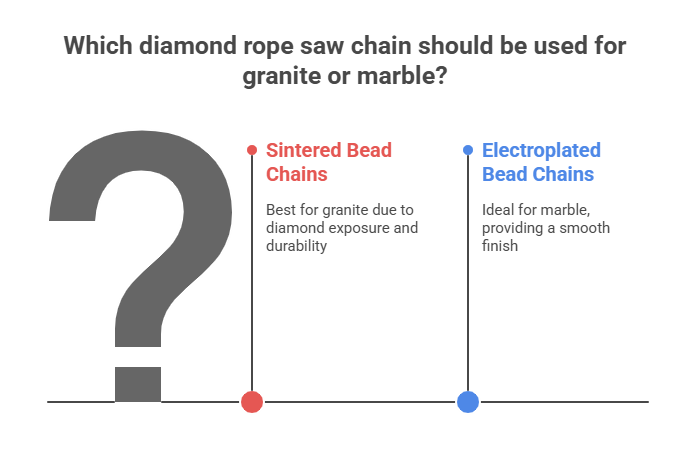
Sintered bead chains in the thicker range handle granite best—more diamond exposure keeps them biting. Quarry operators say consistent bead spacing and strong coatings reduce breaks and keep tension steady.
For marble, electroplated beads give that smooth finish yards want. Cahard’s granite/marble chains get good word for lasting through long runs on American stone types.
If stone cutting is your focus, check our granite & marble rope saw chains and let us know what you’re running.
Top Diamond Rope Saw Chains for Reinforced Concrete
Reinforced concrete with heavy rebar chews up regular chains fast. You need beads that survive steel impacts without losing diamonds.
Vacuum brazed or high-quality sintered with rubber/spring protection lead here. The extra flexibility absorbs vibration, and thicker diameters power through walls or slabs.
Demolition contractors working urban projects tell me reliable chains have cut their downtime way down. Our concrete rope saw chains are made for exactly those conditions.
Best Diamond Rope Saw Chains for Metal and Steel Cutting
Metal work—steel plates, rebar structures, even underwater salvage—demands chains that won’t fail when things get hot.
Vacuum brazed beads on robust cables excel, handling pure iron, copper, or thick steel without glazing over. They’re spark-resistant too, a big plus for salvage or offshore jobs.
Crews doing shipwreck recovery or large structure cuts keep choosing these for durability. See our specialized metal cutting rope saw chains when steel is the challenge.
Key Factors for Choosing Diamond Rope Saw Chains in the USA
Match the bead type to the material—sintered for stone, vacuum brazed for metal/concrete. Diameter affects speed and stability: thinner for precision, thicker for power.
Coating matters—rubber dampens shock on concrete, plastic works well for stone. Bead count and diamond quality determine lifespan.
Wet cutting is standard for cooling and dust control, especially on concrete where OSHA silica rules apply. Good water flow prevents breaks and keeps the cut straight.
Cahard chains use proven technology that performs like the top brands. Browse the full diamond rope saw chain collection when you’re gearing up.
Pro Tips to Get More Life from Your Diamond Rope Saw Chains
Maintain proper tension—too loose wastes time, too tight snaps beads. Plenty of water keeps things cool and clears debris.
Start at lower speed to open a new chain. Reverse direction now and then for even wear. Check beads often and retire the chain before they’re gone.
Safety first—secure everything, full PPE. Follow guidelines for confined spaces or underwater work. OSHA has solid info on silica dust control at their crystalline silica page.
The Construction & Demolition Recycling Association offers useful resources too—check their safety section.
FAQs
What makes vacuum brazed the best diamond rope saw chain for metal cutting?
The beads fuse strongly, holding diamonds even under high heat from steel or rebar—perfect for tough demolition or salvage.
Can one rope saw chain work for both granite and concrete?
It’s possible on lighter jobs, but sintered shines on granite while vacuum brazed or rubber-coated handles concrete rebar better.
What’s the advantage of thicker diamond rope saw chains?
More stability and cutting power—great for faster passes on large granite blocks or thick concrete.
Are these chains suitable for underwater cutting?
Yes, vacuum brazed versions perform well submerged, like on shipwrecks or offshore structures.
Where can I get quality diamond rope saw chains shipped quick in the USA?
Straight from cahardtools.com/diamond-wire-saw/—we stock the popular types and can advise on what fits your machine.
Ready to upgrade your cutting setup? Take a look at our range or email sales@cahard.com for recommendations and quotes tailored to your work.