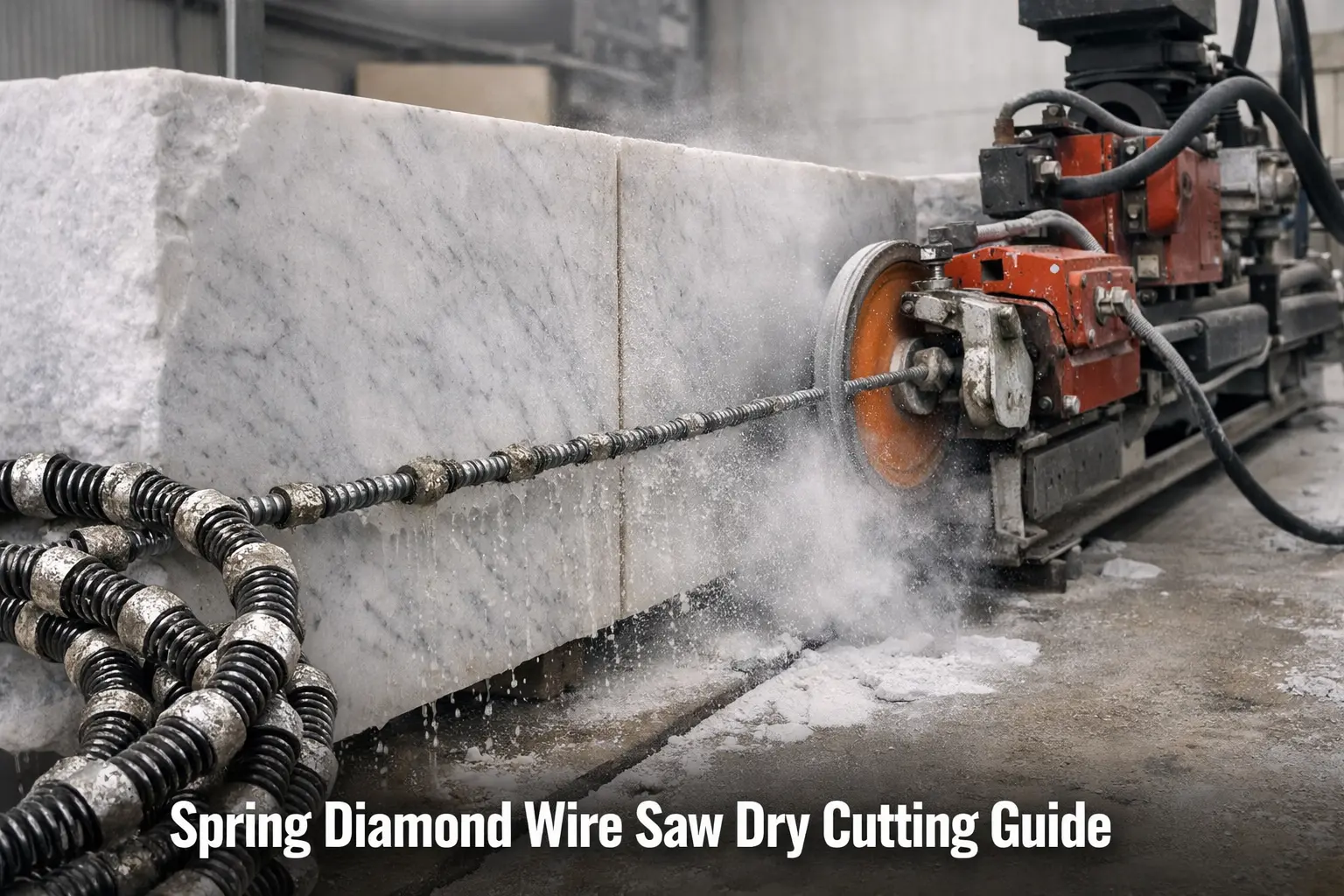
Dry cutting marble with a wire saw sounds straightforward, but it’s not the same as wet cutting. Without water to cool the beads and flush dust, heat builds up fast, beads glaze over, and the cut can get rough or uneven. If you’re working on slabs indoors or at a site with no water supply, that’s when dry cutting becomes necessary—and the wrong wire turns it into a slow, messy job.
This guide is meant to help you find the best spring diamond wire saw options for dry cutting marble. I’ll cover what makes these wires work well dry, the features that matter most, and some practical things that actually make a difference on the job.
Why Spring Coating Is a Good Choice for Dry Marble Work
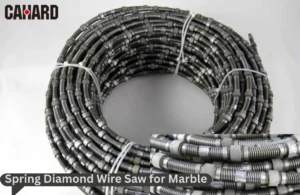
Spring wires have that coiled spring around the cable. It gives flexibility and absorbs vibration, which is really helpful when there’s no water to keep things cool or clear dust. Heat builds up quicker in dry cuts, and the spring helps spread it out a little so the wire doesn’t get too stiff or brittle.
A lot of marble fabricators and smaller quarries prefer spring for dry work because it stays stable over longer runs. Plastic-coated wires are lighter and cheaper, but they don’t handle heat and stress as well. Rubber-coated ones are good at soaking up shock but trap heat more than spring does.
What Makes a Spring Diamond Wire Saw Good for Dry Cutting Marble
Beads are the key. Sintered beads are the standard for marble—they wear evenly and give clean cuts with very little chipping. For dry cutting, high diamond concentration is important so the beads stay sharp longer without water to help cool them.
Diameter is another big factor. 11.5mm is a solid choice for most slab shaping jobs—it’s easy to handle and stable enough for straight cuts. 12.0mm or 12.5mm gives more power for thicker blocks or when you want to move faster, but it’s heavier and needs a stronger machine.
Bead spacing usually runs 37–40 per meter for marble. Closer spacing gives smoother finishes, which helps when dust can build up and make loose beads less effective.

Practical Tips for Dry Cutting Marble with Spring Wire
Start at low speed to break in the wire properly. Keep tension steady—too loose and the cut wanders, too tight and beads can pop. Move the wire back and forth slightly during the cut to spread wear evenly. Check the beads every few hours. Dust buildup can cause glazing; a quick brush-off helps. Use a reliable puller machine. Dry cuts need consistent speed to avoid hot spots.
Dust is the biggest downside of dry cutting, so respirators and good ventilation are non-negotiable. Marble dust is fine and not something you want to breathe long-term.
Frequently Asked Questions
Why is spring better than plastic for dry marble cutting? Spring gives more flexibility and vibration control, which helps when there’s no water to cool or flush the cut.
What diameter is best for most marble slab work? 11.5mm or 12.0mm. They offer a good balance of speed, stability, and ease of handling for typical slabs.
Does dry cutting waste more marble than wet? Not if the wire is right. Sintered beads with good concentration give clean, accurate cuts with very little chipping and low waste.
How long does a good spring wire last on dry marble? Depends on the marble hardness and machine setup, but 150–300 square meters is common with proper tension and breaks.
Where can I get a spring diamond wire saw that works well dry? We carry them at cahardtools.com/diamond-wire-saw. Email sales@cahard.com or call Ms Alice at +86 15902013674—she can help you pick the right size and bead type.
If you’re looking for a spring wire that handles dry marble cutting without wasting material, take a look at our contact page or drop sales@cahard.com a line. Ms Alice can sort you out (+86 15902013674).