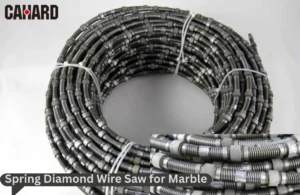
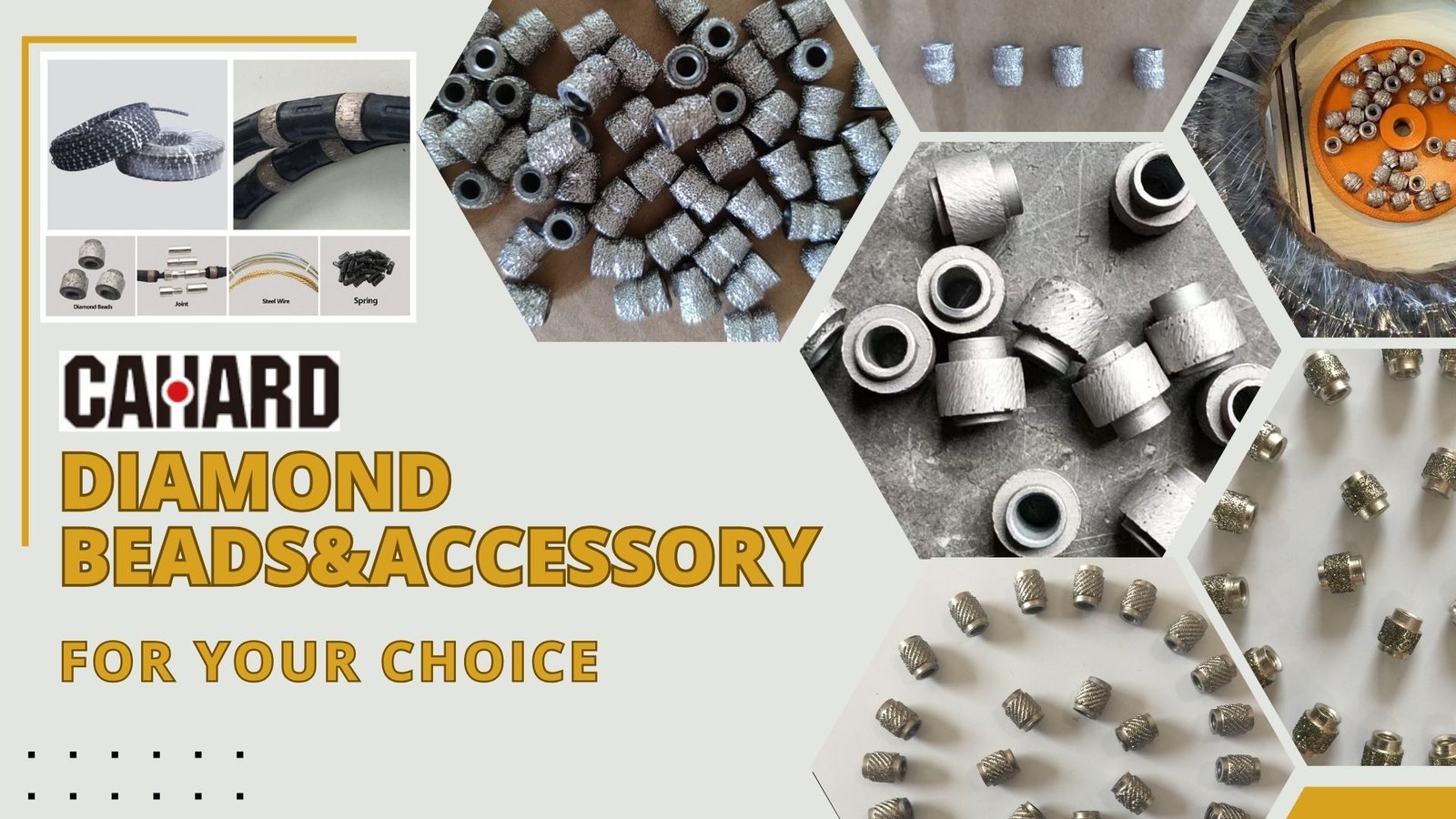
When you’re running a wire saw in a quarry, the beads take the hardest beating. Granite and marble are rough on them — they grind, abrade, and heat up the metal until something gives. Sintered diamond beads are what most quarries end up trusting because they keep cutting consistently over hundreds of square meters without too many surprises.
But not every sintered bead is worth the money. Some lose diamonds early, glaze up, or wear lopsided and leave you changing wires more often than you should. This post is just straight talk about what actually works when you’re paying for beads by the meter.
What sintered beads really are
They start as diamond grit mixed into metal powder — iron, copper, cobalt, nickel, whatever the formula needs. That mix gets pressed into little rings around the steel cable, then heated in a furnace until the metal fuses solid around the diamonds. No melting, just bonding.
The reason they last longer than electroplated beads is simple: diamonds are spread all the way through the bead. As the outer metal wears away, new diamonds keep coming to the surface. That self-sharpening is why sintered beads became the standard for hard stone cutting.
Why most quarries still pick
Granite especially is brutal — it’s dense and abrasive. Sintered beads handle it because:
- The metal matrix can be tuned to wear at the right pace for the stone you’re cutting.
- Diamonds stay exposed evenly, so the cut doesn’t suddenly slow down.
- You get straighter lines and less chipping — matters a lot when you’re trying to sell clean marble slabs.
In the US (Vermont, Georgia quarries) and export markets (Middle East, Asia), sintered beads do the majority of block squaring and primary cutting. They strike the best balance between speed, life, and cut quality.
How to pick sintered beads that won’t let you down
Size basics 11.5mm diameter is still the most common size for quarrying wire — it’s stable without being too heavy. Taller beads (10–12mm height) give you more cutting life but cost more upfront. Shorter ones (8–9mm) are cheaper but wear out quicker.
Grit and diamond concentration Coarse grit (40/50 mesh) cuts faster but rougher — good for hard granite. Finer grit (60/80 mesh) leaves a smoother surface — better for marble or finishing cuts. Higher concentration (more diamonds packed in) lasts longer but you pay for it.
Matrix hardness Soft matrix: hard granite — wears faster so fresh diamonds show up quickly. Medium matrix: most common, works for mixed stone. Hard matrix: softer, more abrasive marble — lasts longer before wearing down.
If your stone is consistent, stick to one formula. If it varies a lot, talk to the supplier about adjusting the mix.
Small habits that make sintered beads last longer
- Break in new wire at low speed for the first 10–20 meters.
- Check tension every shift (200–300 kg range is typical for 11.5–12.5mm wire).
- Keep water flow steady when wet cutting — low flow glazes beads fast.
- Brush beads clean after each shift — dried slurry or dust kills performance.
- Reverse cutting direction every few days to even out wear.
- Look at the beads daily — if more than 10% are flat or missing diamonds, plan to replace soon.
These aren’t fancy tricks — they’re just what the guys who get the most out of their wire actually do.
Frequently Asked Questions
Why sintered beads over electroplated or vacuum brazed? Sintered have diamonds mixed all through the bead, so they keep sharpening themselves. Electroplated only have diamonds on the outside, vacuum brazed is better for metal/rebar but not always the longest life on pure stone.
How many square meters can good sintered beads cut in granite? Usually 200–400 square meters per meter of wire — depends on stone, machine, and how well you maintain it.
Can the same bead formula work for both marble and granite? Not normally. Granite likes a softer matrix to expose diamonds faster; marble usually does better with medium or harder matrix for cleaner, smoother cuts.
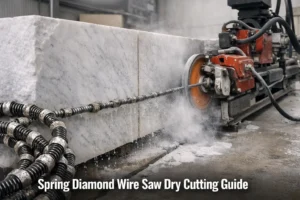
Can sintered beads handle dry cutting? They can, but dry is much harder on them — heat and dust cause faster glazing. Spring-coated wire with high diamond concentration helps in dry conditions.
Where can I get sintered diamond beads made for my specific quarry? We make them here at cahardtools.com. Email sales@cahard.com or call Ms Alice at +86 15902013674 — she can adjust the formula, size, and diamond concentration to match your stone and machine.
If you’re running wire saws in a quarry and want sintered beads that actually last and cut clean, take a look at contact us page what we have or reach out to sales@cahard.com. Ms Alice can help you get the right ones (+86 15902013674).